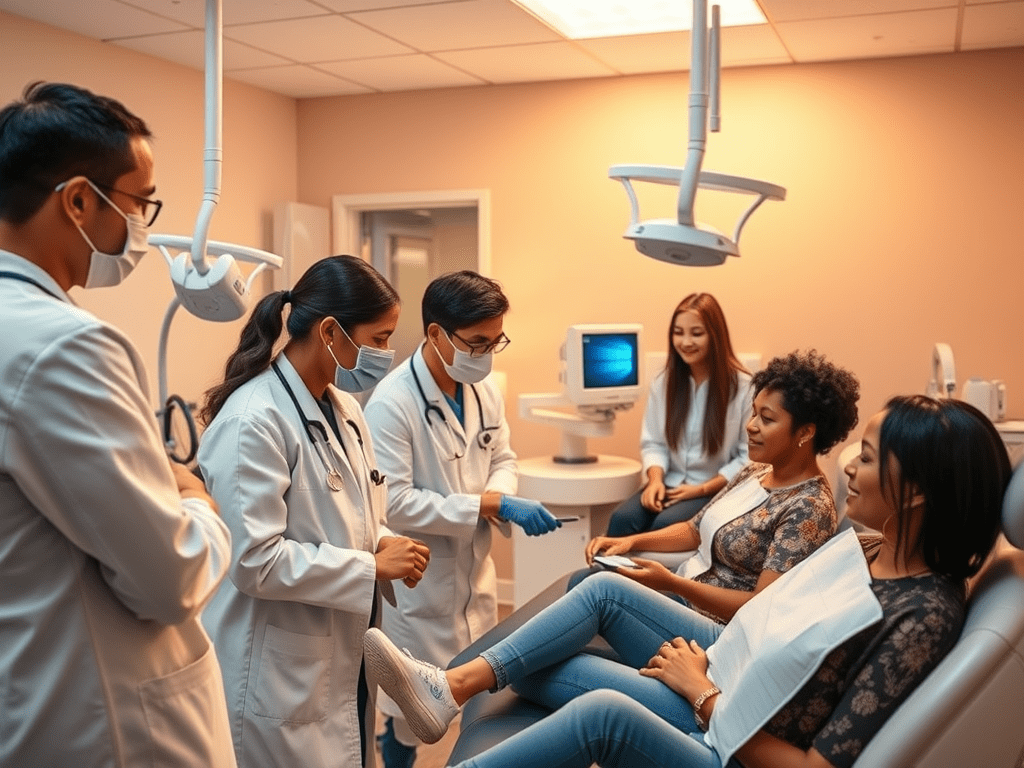
Discover how internationally-trained dentists can join CU SDM’s Advanced Standing DDS program. Learn about admissions requirements, tuition & costs, clinical exposure, and application strategy.
University of Colorado School of Dental Medicine — Advanced Standing DDS 2025 Guide
You still remember that evening. It was the first time you treated a patient under dim lights in a crowded clinic back home. The patient’s anxiety, the faint tug of nerves in your hands, the hum of instruments… and then, slowly, the gratitude in their eyes when you finished. That night you didn’t just fix teeth — you restored confidence. If you’re looking for a place in the U.S. where that feeling becomes your daily grind — where you’ll treat dozens of patients, sharpen your skills, and truly own your journey — then the University of Colorado School of Dental Medicine (CU SDM) might just be your future home.
Why CU SDM Should Be On Your Radar ?
CU SDM’s Advanced Standing International Student Program (ISP) equips you, trained outside the U.S. into fully licensed U.S.-ready professionals. And if you read on, you’ll see why this program stands out — and what you need to get in.
- High clinical volume & diverse patient exposure. CU SDM reports over 80,000 patient visits per year across its clinics, including both on-campus and community-based clinics. That number tells you — you’re not just watching, you’re doing. You’ll experience a vast range of cases. These cases include routine cleanings and fillings. They also extend to complex surgical procedures, implants, prosthodontics, and specialty treatments.
- Compact 24-month Advanced Standing DDS. The program is tailored for international dentists: 24 months from admission to DDS graduation (given you meet requirements). This means you don’t spend extra time repeating basics — you dive into real clinical work faster.
- Holistic, inclusive admissions & global community. The ISP accepts about 40 internationally-trained dentists each year — from over 50 countries historically. That means you’re joining a diverse peer group.
- Innovative facilities, community-clinic network. From simulation labs to on-campus clinics and community outreach sites, CU SDM gives you a full spectrum of training and opportunities to treat real patients under supervision.
CU SDM doesn’t just prepare you to treat teeth. It prepares you to serve communities, learn fast, and build a U.S.-ready dental career.
Program Structure & Intake for International Dentists
| Parameter | Detail |
| Program Name | Advanced Standing International Student Program (ISP) — DDS |
| Cohort Size (International Seats) | ~ 40 students per year |
| Program Length | 24 months (from start date to DDS) |
| 2025–26 Application Window | Opens: Sept 19, 2025 · Deadline: Feb 13, 2026 · Starts: Jan 4, 2027 |
| Patient Visits / Year (All Clinics) | Over 80,000 (on-campus + community clinics) |
Because decisions are rolling, a complete and polished application submitted early can significantly increase your chances. But only if you meet all criteria — more on that below.
What CU SDM Looks For — Eligibility & Application Requirements
To be considered for the Advanced Standing DDS:
- A foreign dental degree from an accredited institution
- Passing score on Part I + II of NBDE or the newer INBDE exam.
- Strong academic history — in recent admitted class, average GPA was ~3.43.
- Competitive English proficiency: TOEFL score of at least 94 (many accepted students had an average TOEFL of ~103.5)
- Good clinical / practical experience and ideally a varied clinical background. Note: being comfortable with hands-on work — not just theoretical knowledge — matters.
- 2–3 solid Letters of Recommendation — from mentors / clinical supervisors who can vouch for your dental skill, professionalism, and ethics.
- Bench Test (hand-skills test) + an interview since you are entering a fast-track DDS, they want to ensure you have the dexterity and readiness to hit the ground running.
CU SDM uses a holistic review. It’s not only about grades or scores — they value clinical readiness, maturity, language skills, and ability to adapt to U.S. dentistry.
Curriculum & Clinical Exposure — What You Actually Get?
Before you step into the clinic, CU makes sure your foundation is rock-solid. The program is designed to refresh — and elevate — everything you already know, aligning your skills with U.S. standards in science, safety, and clinical reasoning. It’s a rigorous but essential phase that bridges your international training with what’s expected in American dentistry.
Once accepted, here’s how your 24-month journey generally unfolds:
Didactic & Preclinical Foundation
- Courses in basic sciences, human body systems, anatomy, physiology, microanatomy — all correlated with clinical practice. This ensures you are grounded in fundamentals before handling real patients.
- Simulation labs and preclinical skills practice — a chance to adapt to U.S.-standard instruments, protocols, and patient-safety norms.
Clinical Rotations & Real Patient Exposure
If you’re the kind of learner who grows through hands-on experience, CU’s clinical training will feel like stepping straight into real-world dentistry from day one. This is an immersive, high-volume clinical environment where you learn by doing. You are supported by faculty who expect you to think, diagnose, and treat like a practicing dentist.
- Straight into clinical courses involving direct patient care in on-campus clinics as well as community-based urban and rural health clinics. CU SDM’s high patient volume means you will see a wide variety of case types, from general dentistry to specialty procedures.
- Exposure to complex treatments: fillings, crowns, bridges, dentures, root canals, extractions (including wisdom teeth), prosthodontics, possibly implant-related work or referrals — under supervision.
- Option to combine with public health focus — through a DDS + MPH dual degree (via Colorado School of Public Health) if you are interested in community dentistry, epidemiology, or public health dentistry.
By the end of your 24 months, you’ll be well-practiced, U.S-board ready, and clinically confident to take on independent practice or specialization.
Cost Breakdown: Tuition, Fees & Living Expenses
Let’s talk numbers — because planning for CU isn’t just about academics and clinical training, it’s also about understanding the financial commitment. From tuition to instruments to living in the Denver–Aurora area, it’s important to know the full picture upfront. This helps you budget realistically and avoid surprises later. Here’s a clear breakdown of what to expect:
Understanding cost is crucial — especially for international dentists budgeting for U.S. schooling. Here’s what 2025–2026 numbers look like:
| Category | Resident DDS (annual) | Non-Resident / Accountable DDS (approx) |
| Tuition | US $46,057 | Up to US $96,184 (non-resident full rate + fees) |
| Instrument Fees (per term) | ~US $2,288 (varies by year) | Same structure applies |
| Other Required Fees (health insurance, campus fees, etc.) | As per campus cost list — health insurance is mandatory unless waived | — |
| Living Costs + Supplies + Insurance + Misc (approx for 1 year)* | Many students budget around US $30,000–45,000 depending on lifestyle & housing. Living costs vary with personal choices & housing setups. | — |
* Estimate — actual depends on where you live, lifestyle, whether you share housing, commute costs, etc.
Note: Because many international dentists are non-resident, plan carefully. Total cost including tuition, supplies, housing, exam fees, travel, and living expenses over two years could be significant.
That said — many students consider it a worthwhile investment given the training, exposure, and eventual U.S. licensure potential.
What Documents & Exams You Need to Apply
Before you hit “submit,” make sure you’ve got every document lined up. CU is thorough. Missing even one requirement can slow down or jeopardize your application. Think of this as your starting toolkit: the essentials you’ll need to prove your training, your readiness, and your ability to thrive in a U.S. dental program. Here’s a checklist to get you started:
- Dental degree from a recognized institution (evaluated, accredited)
- Official transcripts (translated to English if necessary)
- NBDE Part I + II or INBDE score report
- TOEFL (score ≥ 94) if English is not your native language
- 2–3 Letters of Recommendation (clinical / academic)
- SOP (Statement of Purpose) — detailed below
- Supplemental application + $90 supplemental fee (unless you qualify for waiver)
- Preparedness for a bench test (hand-skills test) and possibly interview (invitation only)
Make sure everything is clean, translated, evaluated, and ready — incomplete applications may be rejected.
How to Craft a Powerful SOP for CU SDM?
Crafting a Statement of Purpose (SOP) for CU SDM isn’t just about listing accomplishments — it’s your chance to tell a story that shows who you are as a dentist and as a person. The admissions team wants to see your journey, your motivation, and your readiness to transition into U.S. dentistry. Think of it as a roadmap: where you started, what shaped you, why CU is the right next step, and where you hope to go.
Here’s a recommended structure to make your Statement of Purpose (SOP) stand out — in a tone that feels personal yet professional.
- Start with a vivid clinical anecdote.
Example: your first difficult patient back home — anxiety, pain, language barrier, cultural context — and how you managed to treat them, offering relief and empathy. - Move to your background & training.
Highlight your dental degree, years of practice, range of procedures handled, any specialization or community service, and what shaped your desire to train in U.S. dentistry. - Why CU SDM?
Connect your story to CU’s strengths: high patient volume, diversified case exposure, community outreach clinics, and Advanced Standing program that recognizes your prior training. Show that you’re ready to hit the ground running. - Your vision for the future.
Whether you aim to open a private practice, work in underserved communities, or contribute to public health — explain how DDS from CU will help achieve that. - Why now?
Show maturity: why you want to redo dentistry in the U.S. now; how you’ve prepared (exam scores, documentation, readiness), and why you’re committed to the U.S. dental path long-term.
A heartfelt, honest SOP that connects your past, your motivation, and your future goals often pulls more weight than just “good numbers.”
Life as a Dental Student in Aurora
Think of it as a blend of fast-paced clinical immersion, metropolitan energy, and exposure to one of the most diverse patient pools in the region. Aurora–Denver gives you the best of both worlds — the academic vibe of a major medical campus and the everyday experiences of a growing, multicultural city.
Here’s what your day-to-day might feel like:
- Urban-campus + metropolitan lifestyle. Aurora / Denver is a vibrant metro with access to academic medicine, public health infrastructure, and a mix of urban & suburban living. Great for networking and exposure.
- Diverse patient population. Thanks to on-campus and community-based clinics, you’ll encounter patients of varied backgrounds — valuable for building experience with different demographics, languages, and treatment needs.
- Fast-paced, real-world dental training. Given the high patient volume and compact program length, expect to move quickly from preclinical work to full clinical responsibility — it’s intense, but also incredibly immersive.
- Option for further degrees or specialization. If public health, community outreach, or research interests you — consider the DDS + MPH dual program to expand your skills beyond clinical practice.
Career Paths & Opportunities AFTER GRADUATION
Given CU SDM’s strong clinical exposure and U.S.-style training, you’ll enter the workforce with confidence and a solid patient-management foundation. Once you graduate from the 24-month DDS program and pass the required licensing boards, you’ll have multiple viable paths.
- General private dental practice (general dentistry, restorative, prophylactic care)
- Community clinics / public health dentistry — especially if you pair DDS with MPH or engage in outreach
- Specialty tracks or postgraduate residencies (prosthodontics, oral surgery, etc.) — depending on your interest and further training
- Academic / teaching roles or research — leveraging CU’s academic environment and possibly public health focus
Is CU SDM Right for You? — What Kind of Applicant Fits Best?
If you’re wondering whether CU’s International Student Program is the right fit for you, here’s the truth: this program isn’t just for anyone who wants a shortcut into U.S. dentistry. It’s built for driven, prepared, and genuinely committed dentists who want to integrate into the U.S. clinical system with confidence and competency.
So before you dive in, ask yourself — do you fit the profile of a strong CU candidate?
This program is ideal for you if:
- You already have a dental degree + clinical experience abroad
- You want to transition to U.S. dentistry without re-doing 4 full years
- You’re ready for intense, hands-on patient care, including high-volume clinics
- You are comfortable adapting to U.S. standards (language, patient-safety, protocols)
- You are committed to possibly living in Denver for 2 years (or more)
- You can manage tuition + living costs realistically or have funding / loan options
If that sounds like you — CU SDM offers a powerful, efficient, and connected path to U.S. licensure and a real career.
Final Thoughts
You once walked into a humble clinic back home, unsure but determined. You treated your first patient and felt the spark — the calling. CU SDM’s Advanced Standing DDS is a bridge — from that spark to a refined, U.S.-ready dental career.
It’s intense, yes. It’s demanding. But if you come prepared with your dental degree and exams cleared, you will be ready. With your documents ready and motivation strong, CU SDM could be exactly the right place. It will transform your skills into impact.
Take your time preparing the application. Submit early once you’re ready. And when that acceptance letter arrives — get ready for a truly transformative two years.
 Residency Edge
Leave a comment